



PLK4
PLK4 (Polo-like kinase 4) is a serine/threonine kinase that functions as the master regulator of centriole duplication and initiates procentriole assembly at the mother centriole, thereby maintaining centrosome homeostasis during the cell cycle[1][2][3]. Mechanistically, PLK4 controls the earliest steps of centriole biogenesis through kinase-dependent signaling and phosphorylation events that promote recruitment of centriole assembly factors, including the STIL-SAS6 module required for procentriole formation[4][5]. Autophosphorylation further regulates PLK4 spatial organization and activity, enabling the establishment of a single centriole assembly site and restricting centriole duplication to once per cell cycle[5][6]. Dysregulation of PLK4 expression disrupts centrosome number control; PLK4 overexpression induces centrosome amplification, whereas PLK4 depletion or kinase inhibition prevents procentriole formation and can lead to centrosome loss[2][3][5]. In disease settings, elevated PLK4 expression has been reported in multiple human cancers and is associated with centrosome amplification, chromosomal instability, tumor progression, and adverse clinical outcomes[7][8]. Compared with other Polo-like kinase family members, PLK4 is distinguished by its specialized role in centriole duplication rather than broader regulation of mitotic progression, making it a unique regulator of centrosome biogenesis[2][9]. For experimental applications, selective PLK4 inhibitors such as centrinone enable reversible centriole depletion and provide widely used tools for investigating centrosome biology, cell-cycle surveillance pathways, and therapeutic vulnerabilities associated with aberrant centrosome number[10][11].
References:
- [1]. Herbert M, et al. Homologue disjunction in mouse oocytes requires proteolysis of securin and cyclin B1. Nat Cell Biol. 2003 Nov;5(11):1023-5. [Content Brief]
- [2]. Vogel H, et al. The digestive and defensive basis of carcass utilization by the burying beetle and its microbiota. Nat Commun. 2017 May 9;8:15186. [Content Brief]
All Product Categories
-
PLK4 관련 제품 (18)
관련 제품 (18)

- 1
-
Centrinone
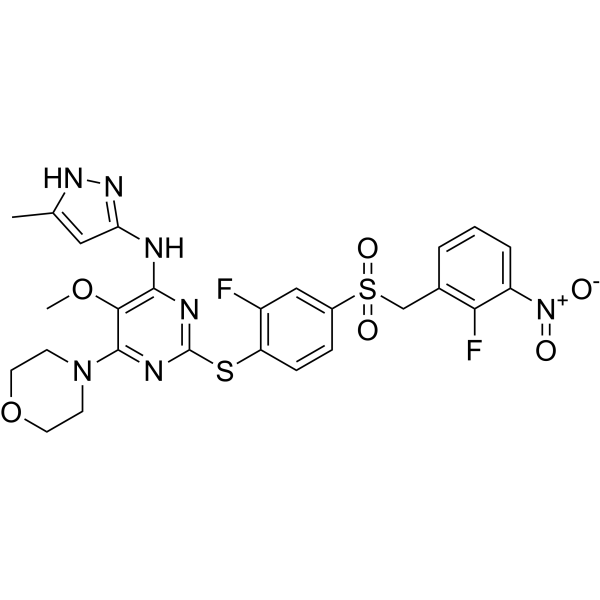 0 ImagesSynonyms: LCR-263Centrinone (LCR-263) is a selective and reversible inhibitor of polo-like kinase 4 (PLK4) with a Ki of 0.16 nM.
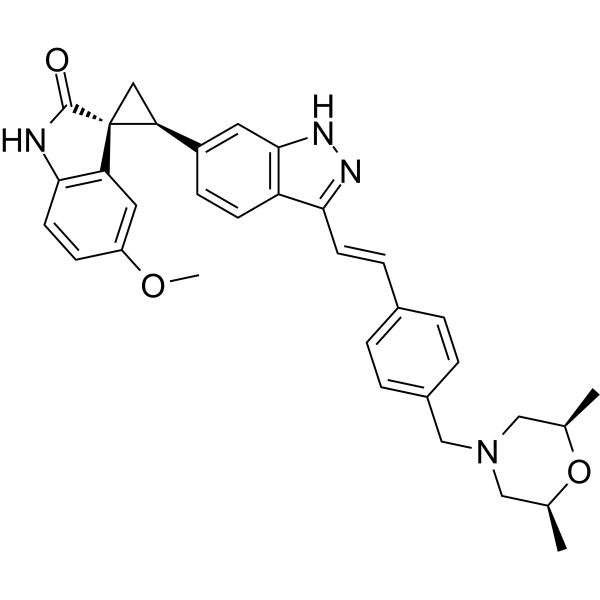
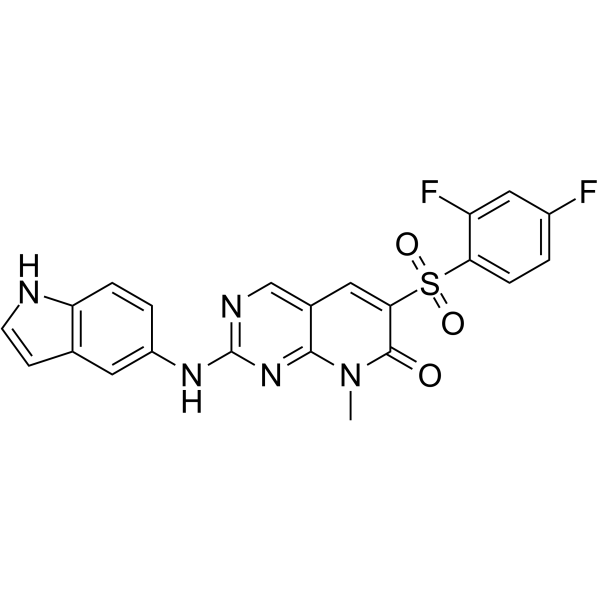
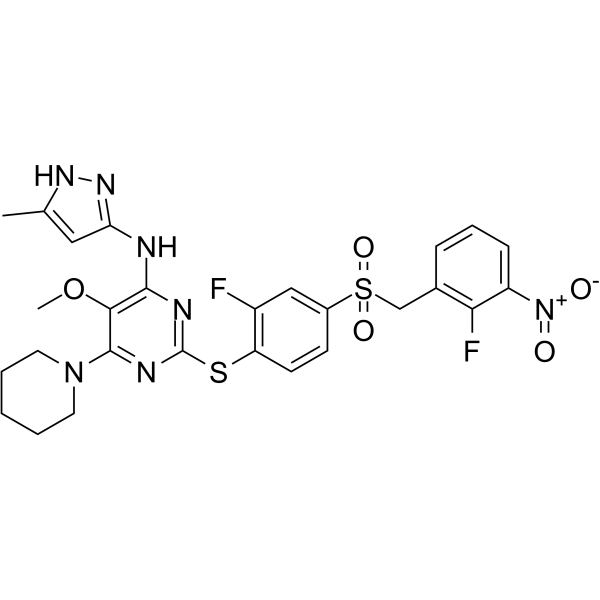
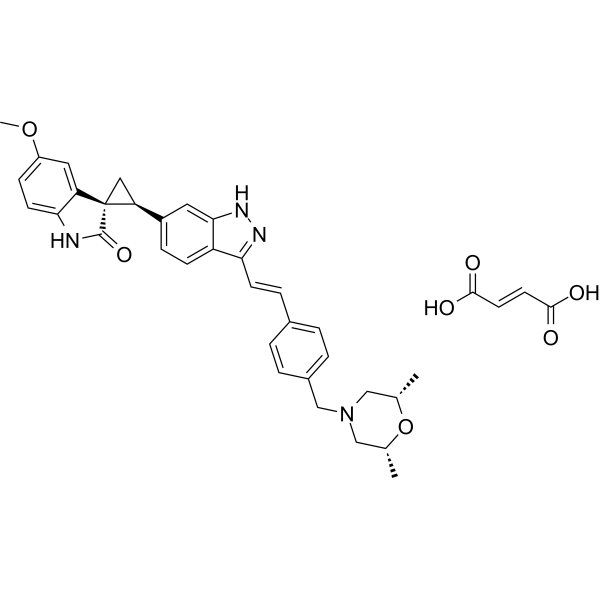
-
SP27
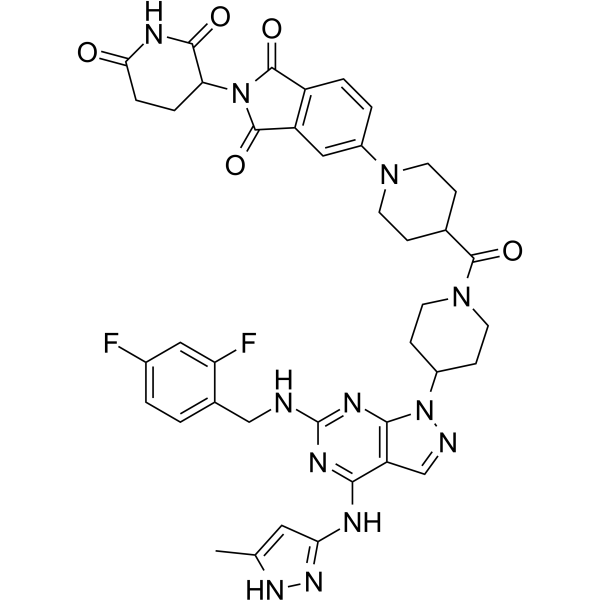 0 ImagesSP27 is a PROTAC PLK4 degrader with an IC50 of 8.4 nM and a DC50 of 19.5 nM against PLK4. SP27 induces PLK4 degradation via the CRBN-dependent ubiquitin-proteasome pathway, inhibits PLK4 downstream signal transduction, and suppresses the growth of TRIM37-amplified breast cancer cells. SP27 is applicable for breast cancer-related research.
-
ZSL-M028
 0 ImagesCat. No.: HY-187506ZSL-M028 is an orally active and selective Polo-like kinase 4 (PLK4) inhibitor with an IC50 value of 1.1 nM. ZSL-M028 exhibits anti-tumor activity against TRIM37-amplified neuroblastoma, downregulates SAS6, upregulates FBXW5, induces G2-phase cell cycle arrest and apoptosis, activates the p53 signaling pathway, and inhibits tumor cell colony formation and migration. ZSL-M028 shows significant tumor growth inhibitory activity in the IMR-32 neuroblastoma xenograft model. ZSL-M028 can be used in neuroblastoma-related research.
-
YLT-11
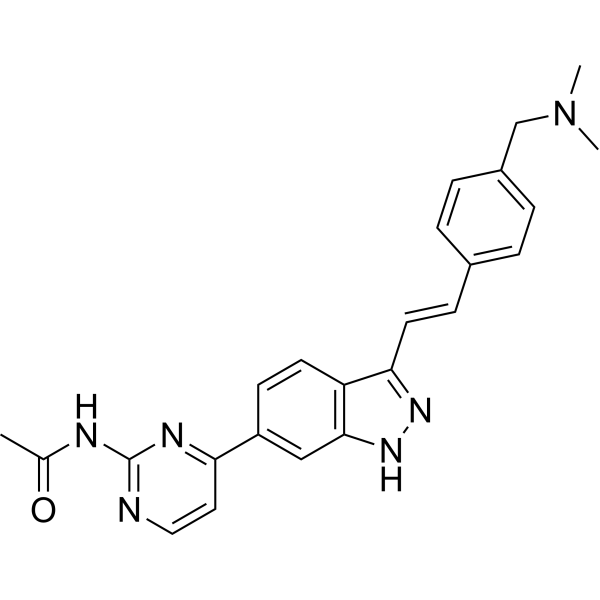 0 ImagesCat. No.: HY-115589CAS No.: 3040940-49-3
-
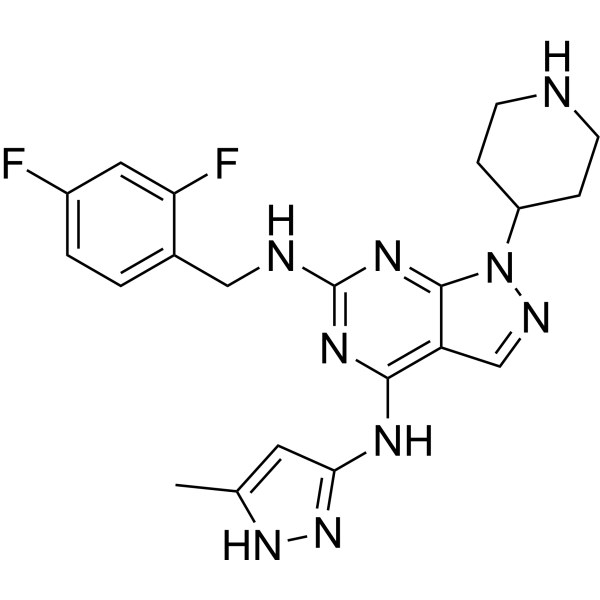
RP-1664
 0 ImagesRP-1664 is a selective and orally active PLK4 inhibitor with an IC50 of 3 nM. RP-1664 demonstrates exquisite selectivity over related kinases, including AURKA/B and PLK1. RP-1664 disrupts centriole biogenesis in cancer cells and leads an accumulation of PLK4 and p21 protein. RP-1664 demonstrates increased sensitivity in TRIM37-high-expressing cells or tumors. RP-1664 exhibits anti-tumor activity in breast cancer and neuroblastoma research[1][2].
-
CZS-241
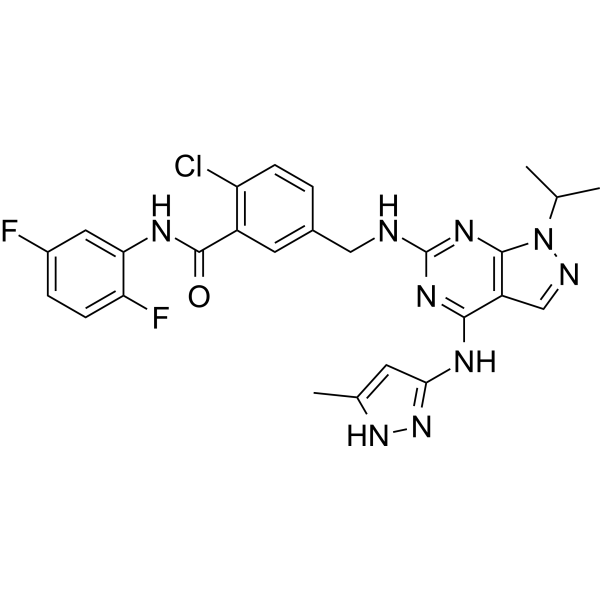 0 ImagesCat. No.: HY-149912CAS No.: 3016297-55-2CZS-241 is an orally active and selective inhibitor of Polo-like Kinase (PLK) 4 (IC50=2.6 nM). CZS-241 inhibits TRKA with an IC50 value of 2.74 μM. CZS-241 induces apoptosis and arrests cell cycle at S/G2 phase. CZS-241 shows highly potent antiproliferative activity against leukemia cell lines, and exhibits safety against normal cell lines.
-
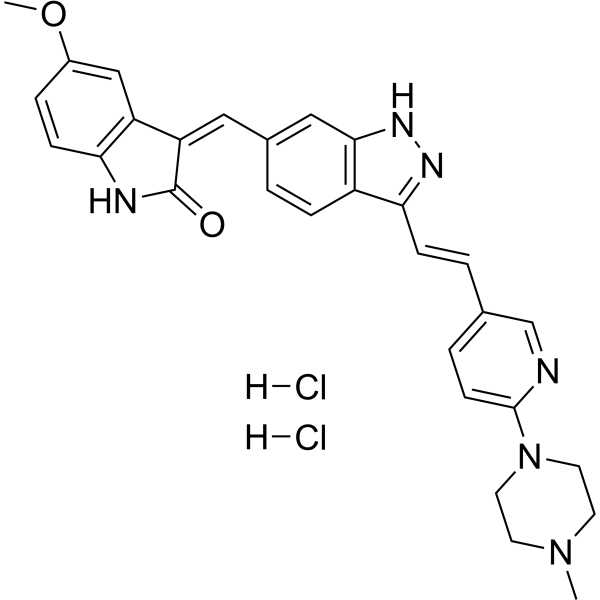
Ocifisertib hydrochloride
 0 ImagesSynonyms: CFI-400945 hydrochlorideOcifisertib hydrochloride (CFI-400945 hydrochloride) is the hydrochloride salt form of Ocifisertib (HY-12300). Ocifisertib hydrochloride is an orally active PLK4 inhibitor with a Ki and an IC50 of 0.26 nM and 2.8 nM. Ocifisertib hydrochloride inhibits growth of various cancer cells, arrests cell cycles at G2/M phase, and induces apoptosis. Ocifisertib hydrochloride exhibits antitumor efficacy in mouse model.
-
CZL-S092
 0 ImagesCat. No.: HY-176734CZL-S092 is a PLK4 inhibitor with an IC50 value of 0.9 nM and excellent selectivity over other PLK4 family members (PLK1, PLK2, and PLK3). CZL-S092 exhibits anti-neuroblastoma activity in vitro (IMR-32 cells, IC50 = 1.143 μM). CZL-S092 inhibits cell migration and halts the cell cycle and induces apoptosis. CZL-S092 can be used in studies of various cancers including neuroblastoma cancer.
-
PLK4-IN-6
 0 ImagesCat. No.: HY-179149PLK4-IN-6 (compound C05) is an PLK4 inhibitor (IC50 < 0.1 nM). PLK4-IN-6 has anti proliferative activity against various tumor cells, such as IMR-32 (IC50 = 0.948 μM), MCF-7 (IC50 = 0.979 μM), H460 (IC50 = 1.679 μM) cells. PLK4-IN-6 can significantly induce cell apoptosis and block the cell cycle. PLK4-IN-6 can be used for research on various types of cancer.
-
PLK4-IN-7
 0 ImagesCat. No.: HY-180111PLK4-IN-7 is a selective and orally active PLK4 inhibitor with an IC50 value of 7.9 nM. PLK4-IN-7 exhibits potent antitumor activity and favorable metabolic stability. PLK4-IN-7 can be used for the research of tumors such as neuroblastoma.
-
PLK4-IN-3
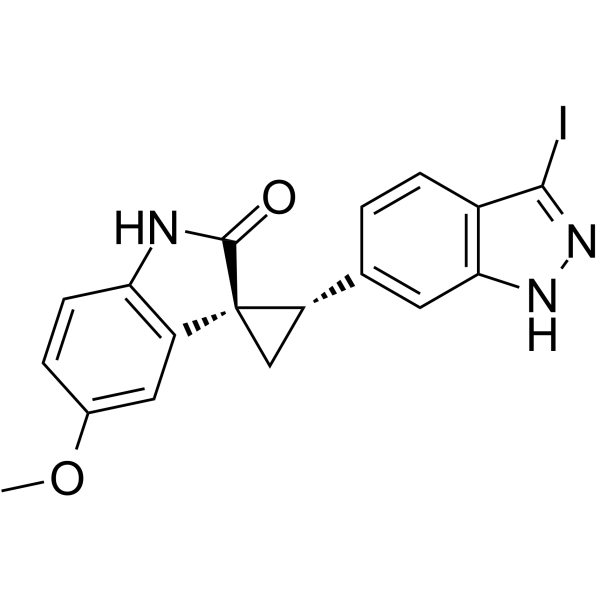 0 ImagesCat. No.: HY-134775ACAS No.: 1247001-86-0
-
PLK2-IN-1
 0 ImagesCat. No.: HY-189637PLK2-IN-1 is a selective PLK2 inhibitor (IC50 0.78 μM). PLK2-IN-1 induces Apoptosis and cell cycle arrest, reduces AKT and mTOR phosphorylation, and decreases Cyclin E expression as well as downregulates the CDK2/Rb/E2F1 axis. PLK2-IN-1 inhibits tumor growth in colorectal cancer xenograft models. PLK2-IN-1 can be used for research on colorectal cancer.
- 1



